

If you are entering the online world for the first time, one of the biggest questions you are probably having is: “How do I get my website to rank on Google?”
This is where SEO for Beginners becomes your strongest tool to rank your website.
In today’s digital world, millions of websites are fighting for attention. If your website does not show on the first page of the search engine then you will lose traffic, leads, and sales. You don’t need to be a technical expert to learn the basics of the SEO. You can rank your website with the best strategy that improve your rankings.
In this you will understand SEO for the Beginners.We will explore how search engines work, how to optimize your website, and how to build a long term plan that helps you grow faster.
What Is SEO and Why Does It Matter?
Before learning any advanced technique of SEO, you must understand the foundation of SEO for the Beginners.
SEO stands for Search Engine Optimization which means improving your website so that search engines like Google can find it easily and show it to users at the top of page.
When someone searches for something related to your business then your website should appear in the results. The higher your ranking the more people will click on your website.
SEO matters because:
It brings free traffic (unlike ads, you don’t pay per click).
It builds brand trust people trust websites that rank higher.
It helps you compete, even against bigger companies.
It increases sales and conversions without massive spending.
This is exactly why learning SEO for Beginners is so important once you set things correctly, your website can keep bringing traffic for months and even years.
How Search Engines Work
To master SEO for Beginners, you need to understand how Google works. Search engines follow three major steps:
1. Crawling
Google sends bots (also called crawlers) to explore your website pages.
2. Indexing
The crawlers store your pages in Google’s database.
3. Ranking
Google decides how high your pages should appear based on the relevance, quality and the authority.
Your job is to make this process easier for the Google.
The easier it is for Google to understand your website and the faster it can rank your pages.
Keyword Research: The Heart of SEO for Beginners
Keyword research means finding the words which people type into Google to find what you offer.
If you target the wrong keywords then your SEO efforts will not give results.
How to find the keywords easily
Use free tools like Google Keyword Planner and Answer the public.
Look for long tail keywords because longer phrases with lower competition.
Choose the keywords that match with your audience’s problems or needs.
Note the search intent what users want when searching your keyword.
For example if your target keyword is SEO for Beginners your audience is likely searching for simple explanations, easy techniques, and beginner friendly tips.
Write content that answers their questions clearly.
When keyword and content match, Google rewards your page.
On Page Optimization: Improve What’s On Your Website
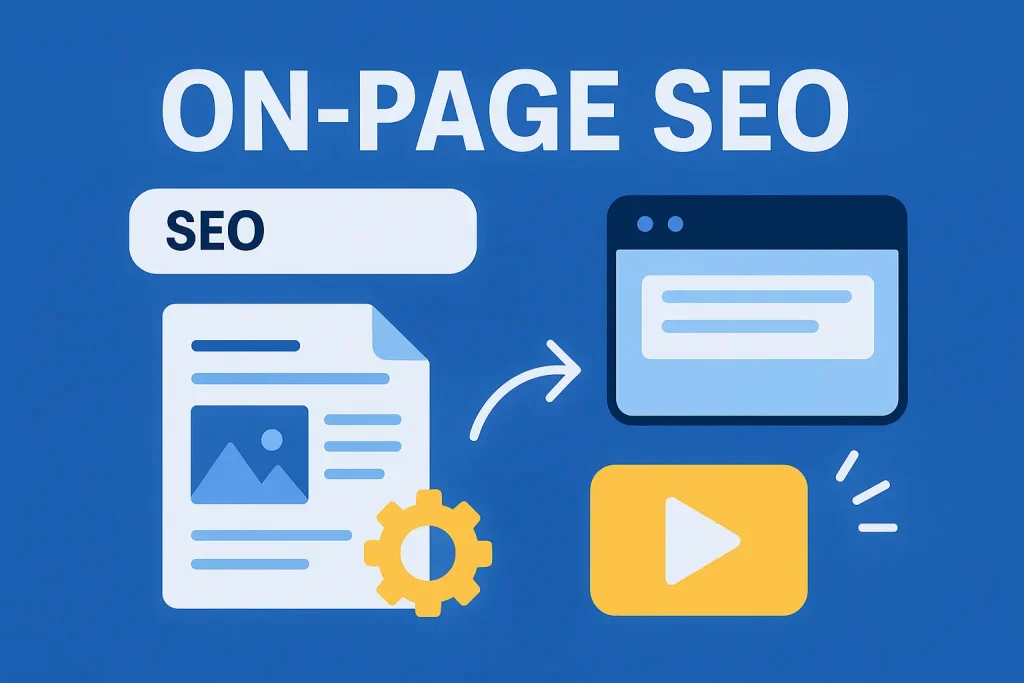
On page SEO includes everything you do inside your website to improve ranking.
And the best part? Most techniques in SEO for Beginners are simple and require no coding skills.
1. Use Your Keyword Strategically
Place your main keyword naturally in:
Title
URL
First paragraph
Subheadings
Image alt text
Overall content
For example, this blog uses “SEO for Beginners” throughout the content in natural placements without keyword stuffing.
2. Write Clear and Informative Content
Search engines love content that:
Answers questions
Provides value
Is easy to read
Uses simple language
As a beginner, focus more on quality than complex SEO tricks.
3. Use Structure and Short Paragraphs
Use headings (H1, H2, H3) bullet points and a short paragraphs.
This improves the readability of the readers and keeps visitors engaged on the website which increase the stay time.
4. Optimize Images
Large images slow down your website.
Use compressed images and relevant alt text (example: “SEO for Beginners guide infographic”).
5. Improve Your Page Speed
Fast websites rank better.
You can speed up your site by:
Compressing images
Using a good hosting provider
Reducing unused plugins
Using a caching plugin (if using WordPress)
6. Make Your Website Mobile Friendly
Most people browse on their phone.
Google gives preference to mobile friendly websites.
In detail – https://www.semrush.com/blog/on-page-seo/
Technical SEO: Don’t Worry It’s Simpler Than You Think
Many beginners get scared when they hear the word “technical.” But SEO for Beginners includes only a few basic technical steps that anyone can do.
1. Submit Your Website to Google
Use Google Search Console to:
Submit your sitemap
Check indexing issues
See website performance
2. Fix the Broken Links
Broken links creates a bad user experience. Tools like Screaming Frog or online link checkers help you find and fix them by an audit.
3. Create a Sitemap
A sitemap guides Google through your pages.
Most website builders generate one automatically.
4. Use HTTPS
A secure website ranks higher and builds trust.
Content Is King: Create Quality That Ranks
Good content is the backbone of SEO for Beginners.
The more helpful your content is, the higher your ranking potential.
What Makes Content Rank?
It solves a problem
It delivers value
It’s original
It’s well researched
It’s long enough to be useful
It keeps readers engaged
Types of Content That Help You Rank Faster
Blog posts
How to guides
FAQs
Long form articles
List posts
Tutorials
Case studies
When creating content using SEO for Beginners, think like your reader:
“What do they want to know?”
“Am I solving their doubt clearly?”
If the answer is yes, Google will automatically trust your content more.
Off Page SEO: Build Trust and Authority
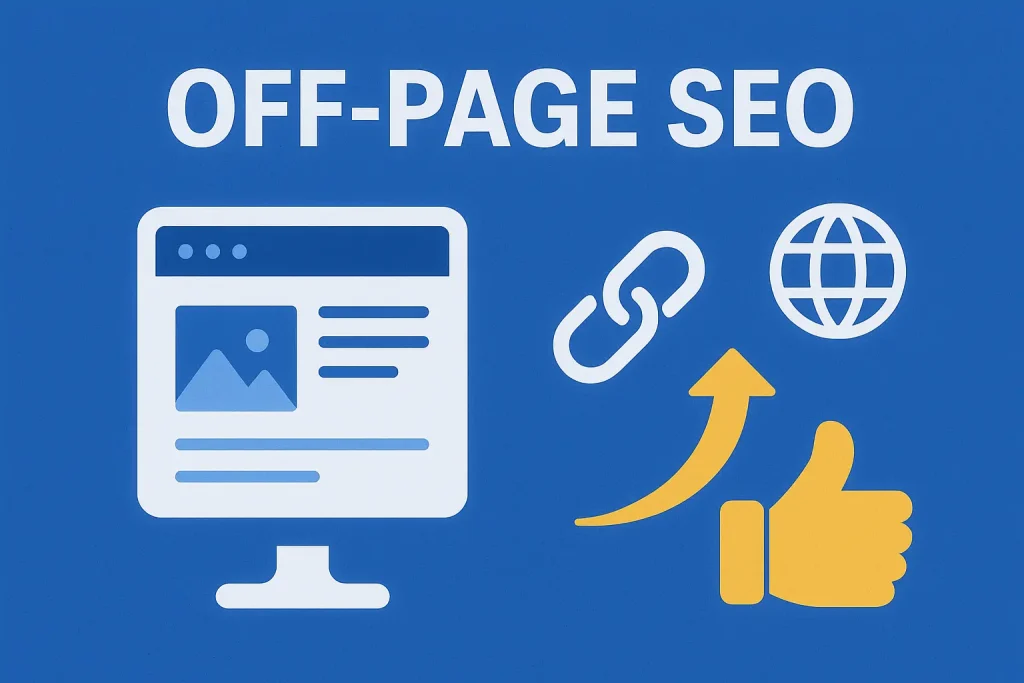
Off page SEO includes everything done outside your website to build authority.
If on page SEO is about telling Google what your website is about, off page SEO is about proving your website is trustworthy.
1. Backlinks
Backlinks are links from the other websites pointing to your website.
They act like votes of confidence.
2. Social Signals
Sharing your content on:
YouTube
…helps bring traffic and signals engagement.
3. Guest Posting
Write blogs for other sites in exchange for a backlink.
4. Local Listings
If you run a local business, list your business on Google Business Profile.
Off page SEO takes time, but it plays a major role in long-term growth.
For people studying SEO for Beginners, it’s enough to start small and be consistent.
User Experience Signals That Affect Ranking
Google doesn’t just look at keywords.
It also checks how visitors behave on your website.
Important signals include:
Time spent on your website
Bounce rate (people leaving quickly)
Page loading speed
Mobile usability
Easy navigation
If users enjoy your content then Google boosts your ranking on the page.
This makes user experience a big part of SEO for Beginners.
Common Mistakes Beginners Should Avoid While learning SEO for Beginners avoid these frequent errors:
❌ Keyword stuffing
Using the keyword too many times harms ranking.
❌ Thin content
Short, low value content doesn’t rank.
❌ Ignoring mobile optimization
Most searches are mobile based.
❌ Not updating old content
SEO is ongoing. Refreshing content improves ranking.
❌ Skipping backlinks
Backlinks are essential for authority.
How Long Time Does It Take to See the Results of SEO?
SEO isn’t instant and beginners often get frustrated when they not get the results.
But here’s the truth:
SEO takes time but gives long lasting results.
Normally:
Small improvements show in 4–6 weeks
Moderate ranking movement takes 2–3 months
Strong, stable results take 6–12 months
Consistency is a key.
If you follow the right methods of SEO for Beginners, you will start noticing improvements sooner.
SEO for Beginners Step by Step Action Plan :
Week 1
Understand the basics of SEO
Set up Google Search Console
Research keywords
Week 2
Start writing optimized content
Fix on page issues
Improve website speed
Week 3
Build internal links
Start simple backlink strategies
Share content on social media
Week 4
Analyze performance
Update and improve content
This simplified roadmap helps anyone mastering SEO for Beginners take action confidently.
Final Thoughts
Learning SEO for Beginners is not a difficult task as it seems.
You don’t need to know coding or the advanced technical tricks.
Only you need a patience and right strategies that focus on the providing best service to your audience.
If you regularly create quality content, optimize your pages and build authority, google will gradually reward your efforts with better rankings.
In future SEO becomes one of the most powerful sources of free traffic on your website, leads and sales.
So start today, apply these steps and watch your website grow.
Our seo service agency – https://markotools.com/